


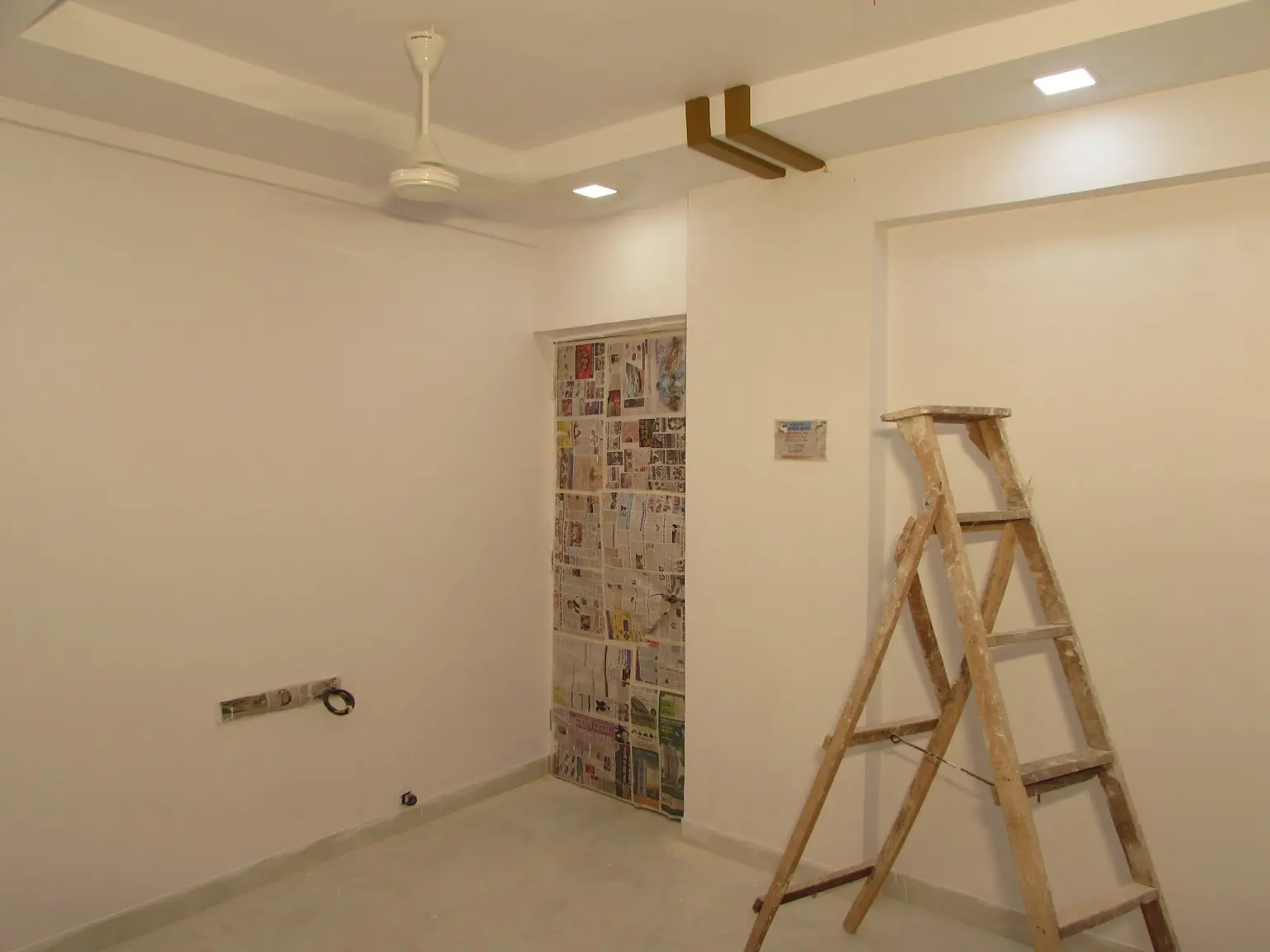
Society NOC for Interior Work in Thane — What to Prepare Before Site Start
Many Thane flat renovations stall for a simple reason: the work starts before society permission is clear.
The carpenter is booked. The tiles are chosen. Then the society asks for written permission, a deposit, or a debris plan you never packed.
Clearing access before demolition saves you a false start, neighbour complaints, and a BOQ rewritten mid-job.
This guide is for Thane and Thane West apartment owners about to start interiors or renovation. It covers what society permission usually means, how that differs from bye-law patterns and municipal or structural triggers, and what to lock before the first wall comes down.
It is not a substitute for your society’s registered bye-laws, your managing committee’s current house rules, or a licensed professional when the work leaves routine interiors.
For the full India-wide planning sequence — scope, budget, contract, handover — use our home renovation checklist for India. That page mentions society rules as one step. This article is the Thane companion: what to prepare, what not to mix up, and when to wait before demolition.
Why Thane societies gate this work
In a cooperative housing society, lifts, common areas, water lines, and the flat below yours are shared.
Work “only inside your flat” still moves debris through the building. Bathroom or plumbing work can risk leakage downstairs. Noise hits quiet hours.
Societies gate work so that:
- Written permission is on record before heavy work starts
- Debris, lift use, and common-area protection are planned
- Neighbours know the work is authorised
- Structural or wet-work risks are not treated as private DIY
How strict this is depends on your building. Some societies want a simple written note for painting. Others want a formal NOC, a refundable deposit, worker IDs, and a clear scope note before any demolition.
There is no single Thane-wide deposit, work-hour window, or approval timeline. Confirm with your secretary or managing committee, and with your society’s registered bye-laws.
Three things people mix up
Online guides often blur three different lanes. Keep them separate.
1. Your society’s house rules
These are managing-committee conditions: work hours, quiet hours, lift rules, debris handling, deposits, and who signs the letter.
Sample NOC letters online show common categories. Amounts, hours, and forms still differ building to building.
Treat every checklist below as something to confirm with your society — not as a rule for all of Thane.
2. Maharashtra CHS bye-law pattern
Many cooperative societies follow a model bye-law pattern (often discussed as Bye-law 46 for additions and alterations). In that pattern, additions or alterations usually need prior written committee permission, often through the Secretary. Structural work sits on a higher bar and may need competent-authority involvement.
Clause numbers and wording vary. Older societies may use different numbering or amended text.
Use this as a typical pattern. Your registered bye-laws are what count.
3. Municipal or structural triggers
Many articles paste Mumbai BMC / MCGM “tenantable repairs” lists — painting, tile replacement, repairing fittings, and similar work that may not need municipal permission in Mumbai.
Those lists are Mumbai, not a ready-made Thane Municipal Corporation (TMC) rulebook. Thane projects sit under TMC. Do not treat BMC sections as TMC law.
| Often society permission first | Pause — get a professional / authority view |
|---|---|
| Painting, modular furniture, many finishes | Removing or altering structural members |
| Like-for-like finish replacement inside the flat | Flat merger; balcony enclosure that changes the building envelope |
| Non-structural furniture layout | Wet-area moves that risk leakage to flats below |
| Major layout changes that affect structure |
If your scope sits in the right-hand column, stop guessing from blogs. Get confirmation before you demolish.
What to prepare before you apply
Use this as a prep list. Ask your society which items they actually want.
Documents societies often ask for
- Proof of ownership or authorised occupancy (as your society defines it)
- Flat / membership details as listed in society records
- Written application (Secretary or Managing Committee — as they require)
- Proposed start and end dates you can keep
- Short scope note: rooms, finishes vs civil/wet work, and any wall, slab, or wet-area change
Building rules to confirm locally
- Work hours and quiet hours for your society (do not copy another building)
- Debris route, temporary storage, and who cleans common areas
- Lift or staircase rules for material and debris
- Any refundable deposit or indemnity your committee currently uses (amounts are society-specific)
- Whether painting-only needs a formal NOC or a lighter written intimation in your building
Be honest about scope
- Say clearly if bathrooms, waterproofing, plumbing, demolition, or wall changes are included
- If structural or municipal questions come up, note that you will get the right professional sign-off — do not hide that under “interiors only”
Drop anything your society does not use. Add anything they ask for that is not on this list.
What to ask your contractor to bring
A team used to Thane societies should help you assemble a clean pack. Ask them for (good practice — not a claim of law):
- A written scope note that matches the real site work — rooms, wet work, demolition, exclusions
- Provisional dates that fit your society’s hours once those hours are confirmed
- A debris and protection plan for common areas and the lift
- Worker identity / firm contact as your society asks
- A clear line that load-bearing or structural work will not start without the right permissions
For full-home interiors with coordinated civil work, start with our interior designer in Thane page. That page already says a site visit confirms society rules and access before work begins.
If the job is renovation-led (older resale flat, civil first), see home renovation in Thane. If the lead problem is base civil or waterproofing, see civil contractor in Thane.
Right order: permission, then demolition
- Read your society’s current rules (and registered bye-laws where additions or alterations are covered).
- Define scope honestly — finishes only vs civil, wet, or structural.
- Submit the application or NOC pack your society asks for.
- Wait for written permission (or the lighter written confirmation your society uses) before breaking work.
- Only then demolish, open wet areas, or move heavy material.
- Lock the written room-wise BOQ after society access and site condition are clear — not before.
A verbal “should be fine” is a weak start. So is locking finishes and carpentry prices before anyone has checked lift rules, waterproofing, or whether wet work is allowed in the window you assumed.
Once scope is real, how to read a renovation quote / BOQ helps. For the wider planning phases around this step, return to the India renovation checklist.
Red flags
- Starting without writing when your building requires it
- Calling wet-area or wall changes “just interiors” to skip scrutiny
- Copying BMC tenantable-repair lists as if they were TMC rules for Thane
- Assuming a friend’s society deposit or hours apply to your building
- Debris in common areas or a blocked lift with no agreed plan
- Structural DIY, balcony enclosure, or flat merger without competent professionals
- Signing a finish-heavy BOQ before society access and site condition are confirmed
How a site visit helps
A useful site visit for a Thane flat is not only about laminates.
It checks civil condition, access, and — in a society building — what the managing committee already requires before work can start.
Society rules and site condition should shape the written room-wise BOQ. Not the other way around.
Jyani Interior plans and builds complete homes in Thane — design and civil under one accountable team — with a free site visit before quoting. Since 2002, we have supervised 500+ projects across Thane and the wider MMR, led by founder Bhawarlal Jyani.
We do not promise a fixed approval timeline, a standard deposit for every society, or that one pack fits every building. Those details belong to your society — and we check them on the visit before the BOQ is locked.
Book a free site visit
We confirm society access rules before locking a written room-wise BOQ.
- Interior designer in Thane
- Or contact us
- Call / WhatsApp: +91 9224598745
- Email: [email protected]
- Studio: Art Cera, Tikuji Wadi Road, Ghodbunder Road, Manpada, Thane West 400610
FAQ
Do I always need a formal society NOC before interior work in Thane?
Many societies want written permission or at least written intimation before interiors or renovation. How formal that is varies by building. Ask your secretary or managing committee, and check your registered bye-laws. Do not assume one rule for all of Thane.
What is the difference between society house rules and CHS bye-laws?
House rules are your committee’s practical conditions — hours, debris, deposits. CHS model bye-law patterns describe a broader framework many societies use for additions and alterations (often discussed around Bye-law 46). Your registered bye-laws control. Model commentary is a guide, not a substitute.
Do BMC “tenantable repair” lists apply to Thane flats?
Those lists are Mumbai (BMC/MCGM) references. Thane sits under TMC. Do not paste BMC rules as Thane law. For structural or municipal questions, verify with a licensed professional and the relevant authority.
When should I involve a structural engineer?
When work may affect structure — removing or altering structural members, mergers, balcony enclosure, or similar — get competent professional input before demolition. Society permission and structural clearance are not the same thing.
Should I lock the BOQ before society permission?
No. Confirm society access and site condition first, then lock a written room-wise BOQ. That avoids rewriting scope after the first complaint or stop-work.
How does this relate to the India renovation checklist?
The India checklist covers the full planning sequence and mentions society rules once. This article is the Thane-specific permission prep inside that early step.
Related reading
Related Posts
Prev